

EY Inbox Prioritisation Exercise 2027: What It Tests & How to Tackle It
The EY inbox exercise assessment centre stage drops you into a simulated workday — a full inbox of emails, meeting requests, and urgent tasks — and asks what you do first. Nobody warns you about this exercise in advance, and candidates meeting it cold on assessment day freeze. That freeze is exactly what the exercise is designed to detect.
EY Inbox Exercise Assessment Centre: What It Is
The EY inbox prioritisation exercise is a classic in-tray assessment used at the assessment centre or Experience Day. You get a batch of items — client emails, internal requests, deadline reminders, a meeting clashing with a deliverable — and limited time to work through them. You rank items by priority, decide responses, and sometimes draft short replies.
It mirrors an associate's real morning: everything arrives at once, everything claims urgency, and you must impose order. The materials feel like actual EY work, which is why first-timers find them disorienting.
What the EY Inbox Prioritisation Exercise Tests
Judgement under ambiguity. There is no single correct order — assessors score your reasoning. They watch whether you separate genuinely urgent items from merely loud ones, protect client deadlines, escalate problems you cannot solve alone, and communicate your reasoning clearly.
It also tests measured ruthlessness. Candidates who try to do everything fail; candidates who confidently defer low-value items pass. EY wants people who can say no to non-urgent work without being dismissive — the tone of your drafted replies matters as much as the order you choose.
EY Inbox Exercise Assessment Centre: How to Tackle It
Apply one framework to every item in a single pass: urgent and important first, important but not urgent scheduled, urgent but low-importance delegated or deferred, neither dropped. Then write one-line justifications for your top three and bottom three choices — assessors ask about those.
Keep drafted replies short and professional: acknowledge, state the action, give a timeline. Long, apologetic emails signal overwhelm. Never invent information — if an item references something unknown, note it as needing clarification rather than guessing.
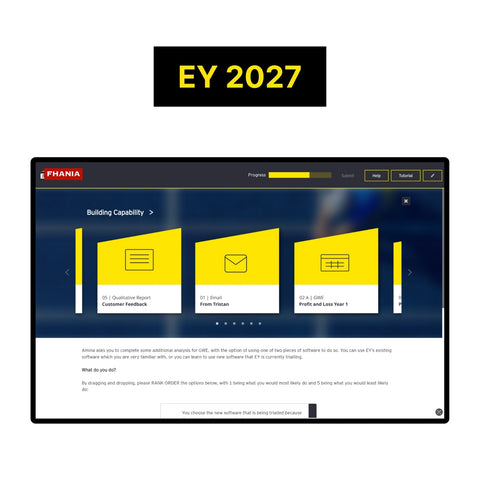
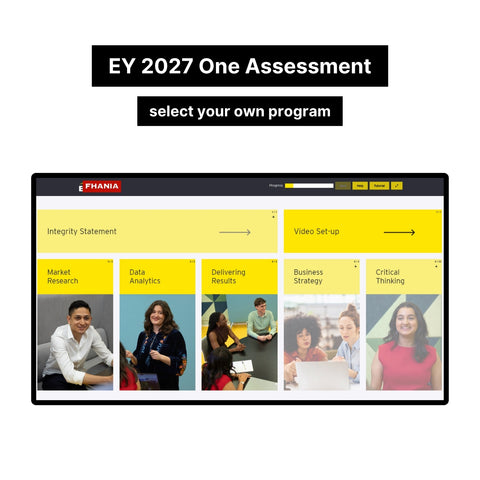
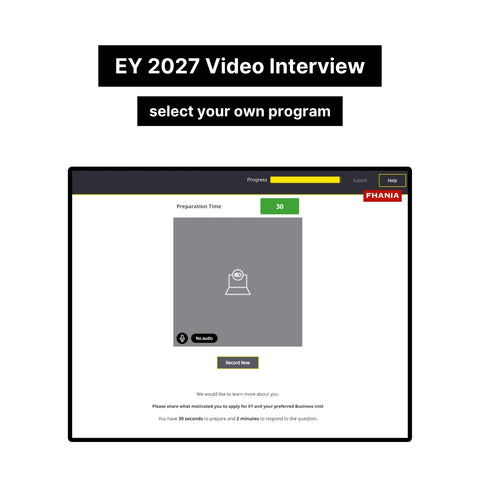
Our 2027 EY Online Assessment and Video Interview Tutorials covers the work-sample exercises EY uses in the 2027 cycle with worked prioritisation logic and response drafting, so the format is familiar before you sit down.
Why First-Timers Get Caught Out
Nobody tells you this exercise exists, and walking in cold means spending your first ten minutes learning the format while prepared candidates are already ranking items. An inbox exercise rewards pattern recognition — the people who pass have seen one before. For the 2026 application season, check the official EY careers page for assessment centre details in your region, then run one full in-tray practice before the day. The gap between freezing and performing is a single practice session.
FAQ
What is the EY inbox prioritisation exercise? A timed in-tray exercise: rank and respond to a simulated batch of work emails and tasks at the assessment centre stage.
How is it scored? On prioritisation logic, urgency-versus-importance judgement, escalation decisions, and the professionalism of drafted replies.
How long does it take? Typically 30 to 45 minutes of working time, sometimes followed by a discussion of your decisions.
What is the biggest mistake? Trying to do everything. Refusing to defer or drop low-priority items shows poor judgement under pressure.
Preparing for EY's assessment centre? Our 2027 EY Online Assessment and Video Interview Tutorials has the exact questions and answers — $79 one-time, instant download.