Citadel Quant Developer Interview: Coding + Probability + C++
The Citadel quant developer interview is a triple threat: you must clear a coding assessment, a speed-based probability test, and deep C++ questioning. Most candidates are strong in one or two of the three. Citadel hires the ones who are strong in all three — and the interview is designed to find your weak pillar fast.
What the Citadel Quant Developer Interview Covers
The Citadel quant developer interview blends the software engineering and quant research pipelines into one demanding process:
- Coding: The HackerRank OA plus live algorithmic rounds — arrays, greedy, hashing, with trading-flavored problem statements. Same bar as SWE, no discount for quant background.
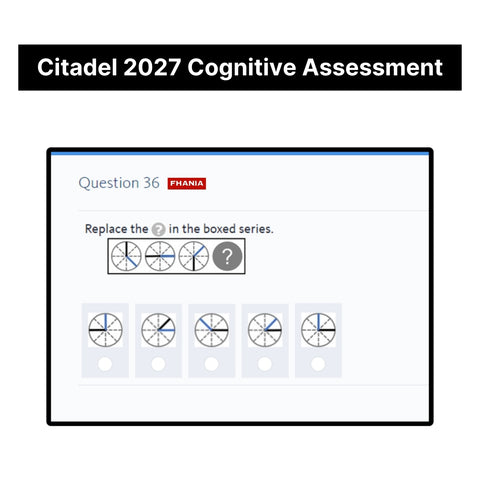
- Probability: The timed probability assessment (candidates report roughly 50 questions in about 12 minutes) plus probability puzzles in live interviews: expected value, conditional probability, and betting-style questions.
- C++ depth: Memory management, STL internals, move semantics, and latency-aware coding. Quant developers write production trading code, so the C++ bar is as high as the probability bar.
What the Citadel Quant Developer Interview Assesses
The underlying question is whether you can operate at the intersection: a strong programmer who thinks probabilistically, or a strong quant who ships fast C++. Interviewers probe each pillar separately, then watch how you handle the transitions. A brilliant probabilist who writes sloppy C++ fails. A great coder who freezes on expected-value questions fails. The role demands all three because the job demands all three.
How to Prepare for the Citadel Quant Developer Interview
Split your preparation into three tracks and neglect none. For coding, drill Citadel's actual OA patterns. For probability, do timed question sets daily until 14-seconds-per-question feels routine. For C++, practice explaining internals aloud under follow-up pressure. Our 2027 Citadel Online Assessment and Coding Challenge Tutorials covers all three tracks with real Citadel questions — the coding problems, the probability bank, and the C++ interview questions — so you're preparing from one source instead of three.
Being Great at Two Out of Three Is Failing
This is the cruelest math in Citadel's hiring: excellence in two pillars doesn't compensate for weakness in the third. Every cycle, strong coders wash out on probability and strong quants wash out on C++. Audit yourself honestly, find your weak pillar, and attack it first. For the 2027 intake, check the official Citadel careers page for timelines — then make sure all three pillars are load-bearing before you apply.
FAQ
How is a quant developer interview different from a quant researcher interview?
Quant developers face heavier coding and C++ requirements; researchers lean more toward statistics, modeling, and research discussion. Both face probability testing.
Do quant developers take the same OA as software engineers?
Largely yes — the coding bar is comparable, with the probability assessment added on top.
What C++ level is expected for Citadel quant developers?
Production-level: memory management, STL internals, and latency-aware design, since you'll write code that trades.
Can a strong mathematician with weak C++ still get hired?
Unlikely. C++ weakness is one of the most common failure reasons for quant developer candidates.
Preparing for Citadel's coding challenge? Our 2027 Citadel Online Assessment and Coding Challenge Tutorials has the exact questions and answers — $79 one-time, instant download.