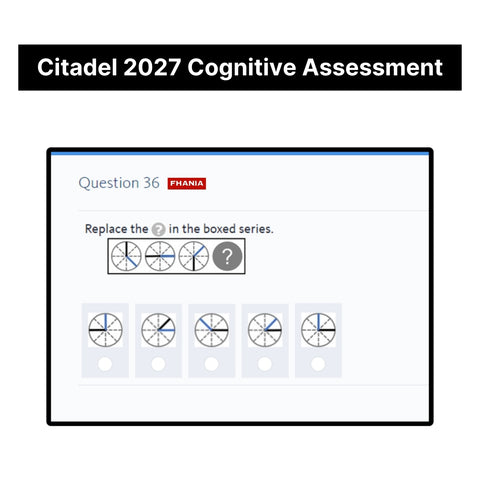
Citadel OA Coding Questions: Arrays, Greedy & Hashing Breakdown
Citadel OA coding questions cluster around three topics: array manipulation, greedy algorithms, and hashing. If you can solve medium-hard problems in these three areas within 25 minutes each, you can pass the Citadel HackerRank round. If you can't, no amount of dynamic programming practice will save you — Citadel tests what it tests.
What Citadel OA Coding Questions Look Like
Citadel OA coding questions are algorithmic problems framed in finance-adjacent scenarios: matching orders, computing rolling statistics over price series, scheduling tasks under constraints. The wrapping is trading; the core is classic computer science. Typical patterns include:
- Arrays: sliding windows, prefix sums, two pointers, in-place transformations on large inputs where O(n²) times out.
- Greedy: interval scheduling, minimum-cost constructions, and problems where a locally optimal choice provably yields the global answer — Citadel loves testing whether you can spot the greedy structure instead of reaching for DP.
- Hashing: frequency counting, subarray sums with hash maps, deduplication, and lookups that turn quadratic solutions into linear ones.
What Citadel OA Coding Questions Assess
Each question is engineered to separate candidates on three axes. First, pattern recognition: can you identify the right technique in the first five minutes? Second, correctness under hidden tests: samples pass easily; the grading cases probe empty inputs, duplicates, integer overflow, and off-by-one boundaries. Third, complexity discipline: brute force that passes small tests will time out on Citadel's large hidden inputs, and the platform measures it.
How to Prepare for Citadel OA Coding Questions
Stop solving random hard problems. The highest-ROI preparation is drilling the exact question families Citadel reuses. Our 2027 Citadel Online Assessment and Coding Challenge Tutorials contains real Citadel OA coding questions — the arrays, greedy, and hashing problems candidates actually faced — with optimal solutions, complexity analysis, and the hidden edge cases explained. Work each one timed, review the walkthrough, then re-solve from memory until the pattern is automatic.
The High-Frequency Patterns Are Public — to Everyone But You
Citadel does not invent new problem families every year; it rotates through the same high-frequency patterns. That means the candidate who studied the real questions walks into the same three topics you do — except they've already solved them. Every week you spend on generic practice is a week someone else spends on the actual Citadel OA coding questions. For the 2027 intake, check timing on the official Citadel careers page and start drilling the real patterns now.
FAQ
Are Citadel OA coding questions LeetCode hard?
Roughly medium to medium-hard, but the time pressure and hidden edge cases make them feel harder. Speed matters more than raw difficulty.
Does Citadel reuse OA questions?
Patterns repeat heavily across cycles. Candidates frequently report familiar problem structures, which is why studying real past questions pays off.
Is dynamic programming tested in the Citadel OA?
Occasionally, but arrays, greedy, and hashing dominate. Master those three first; treat DP as a bonus.
How many test cases do Citadel OA questions have?
Dozens of hidden cases per problem, including large inputs that punish inefficient solutions. Always aim for the optimal complexity, not just a working one.
Preparing for Citadel's coding challenge? Our 2027 Citadel Online Assessment and Coding Challenge Tutorials has the exact questions and answers — $79 one-time, instant download.