Capital One Interview Questions 2027: Portfolio Profitability Case (How to Answer)
Compute risk-adjusted profit per account per FICO segment — revenue minus expected losses minus costs — then grow the highest risk-adjusted segments and shrink or reprice the lowest, keeping diversification. These Capital One interview questions on portfolio profitability are commonly reported by candidates.
Capital One Interview Questions: What This Question Assesses
The question tests risk-adjusted thinking: can you see that a high-revenue, high-loss segment may be worse than a modest-revenue, low-loss one? Interviewers want the full unit-economics equation per segment and a portfolio view — concentration risk, regulatory considerations, and the fact that shrinking a segment has revenue implications too.
Capital One Interview Questions: How to Answer
- Compute profit per account per segment. Revenue per account minus (loss rate × average balance exposure) minus servicing and funding costs — for each FICO band.
- Rank by risk-adjusted return. The grow/shrink decision follows risk-adjusted profit, not headline revenue. High-FICO segments usually win on losses; mid segments often win on blended return.
- Apply portfolio constraints. Do not over-concentrate in one band; consider diversification, stress scenarios, and regulatory expectations around fair lending.
- Name the actions. Grow: increase acquisition spend and credit lines in top segments. Shrink: tighten underwriting, reduce line increases, or reprice the weakest segments — shrink gradually to avoid cliff effects.
Sample line: "I'd rank each FICO band by profit per account after expected losses, grow the top risk-adjusted segments, and tighten or reprice the bottom — while keeping diversification so we're not concentrated in one band."
Common Mistakes
- Ranking by revenue alone — ignoring loss rates is the central trap.
- Recommending extreme concentration in the single best segment — portfolios need diversification.
- Forgetting the actions differ — growing means acquisition and line strategy; shrinking means underwriting and pricing, not just "fewer accounts."
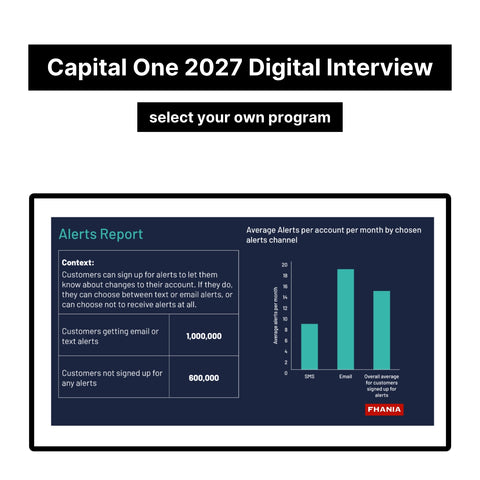
Use the case's data table explicitly in your answer — interviewers gave it to you for a reason. Details may vary by role and region; check Capital One's official careers page.
Keep Reading
- deloitte competing deadlines prioritise
- Capital One Digital Interview: Questions & Tips
- Capital One Hiring Timeline 2027: From Application to Offer
FAQ
Which FICO segment should a card portfolio grow? The one with the highest risk-adjusted profit per account (revenue minus expected losses and costs) — computed from the case data, subject to diversification.
Why not just grow the highest-revenue segment? Because high revenue often comes with high loss rates; risk-adjusted profit is the correct ranking metric.
How do you shrink a segment responsibly? Tighten underwriting for new accounts, slow line increases, and reprice where possible — gradual, not abrupt.
Is this case common at Capital One? Portfolio profitability cases are commonly reported by candidates in Capital One interviews, though exact prompts may vary by role and region.
Preparing for Capital One's interview? Our 2027 Capital One Virtual Job Tryout Online Test and Digital Interview Tutorials has practice questions and answers — $79 one-time, instant download.