Bid-ask spread (Explained): Interview Answer Guide 2027
This bid ask spread interview question is asking about the cost of immediacy: the bid-ask spread is the gap between the highest price a buyer will pay (the bid) and the lowest price a seller will accept (the ask). It compensates liquidity providers for the risk of quoting, and its width is driven by liquidity, volatility, and tick size.
What This Bid Ask Spread Interview Question Tests
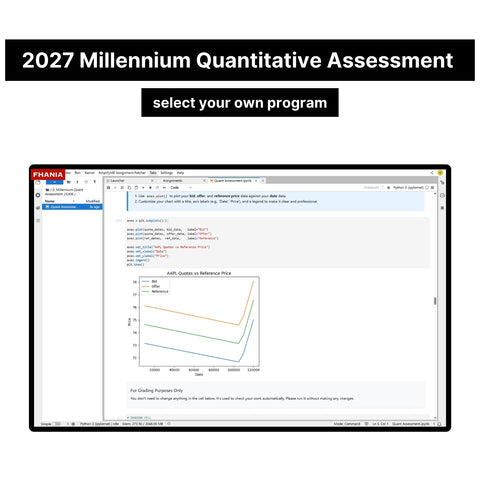
The bid-ask spread is the difference between the best bid — the highest price any buyer currently offers — and the best ask (or offer) — the lowest price any seller currently accepts. It exists because liquidity providers need compensation: quoting firm prices means taking on inventory risk and the danger of trading against better-informed counterparties, so the spread is their fee for standing ready.
Three forces set its width. Liquidity: heavily traded stocks with deep order books have penny-wide spreads; thin names have wide ones — spread is liquidity made visible. Volatility and uncertainty: when prices jump, quotes go stale faster and adverse selection risk rises, so makers widen spreads to protect themselves. And market structure: the minimum tick size sets a floor, while information asymmetry (some traders knowing more) widens spreads as makers defend against being picked off.
How to Answer This Bid Ask Spread Interview Question
Define both sides crisply — bid is the best buy price, ask the best sell price — then compute a spread from a sample quote to show the arithmetic (ask minus bid, often expressed in basis points of the midpoint). That takes thirty seconds and grounds everything.
Common Mistakes on the Bid Ask Spread Interview Question
- Confusing spread with commission. The spread is a market cost paid to liquidity providers via the execution price; commissions are broker fees on top. They're separate costs that add up.
- Quoting spread without context. “A $0.05 spread” means nothing without the price — 10bps on a $50 stock, 100bps on a $5 stock. Always scale to the midpoint.
- Assuming the quoted spread is what you pay. Limit orders inside the quote, midpoint fills, and price improvement mean the effective spread often differs — execution quality is measured against the midpoint.
This is the kind of technical question that commonly decides interview rounds — candidates report that one hesitant or rambling answer here can end the process on the spot. Practice saying your answer out loud until it sounds calm, structured, and confident.
Keep Reading
- millennium management interview questions
- integrity interview
- Millennium Video Interview: What to Expect
- How to Apply to Millennium 2027: Process & Deadlines
FAQ
Who earns the bid-ask spread?
Liquidity providers — market makers and limit-order traders whose quotes get hit. It's their compensation for inventory risk and adverse selection.
Why do some stocks have much wider spreads?
Lower liquidity (thin order books), higher volatility, and greater information asymmetry all widen spreads — makers need more compensation where quoting is riskier.
How can traders reduce spread costs?
Use limit orders instead of market orders, trade patiently rather than demanding immediacy, and concentrate trading in liquid names and liquid hours.
What is the effective spread?
Twice the distance between the actual execution price and the quote midpoint — what the trader really paid, which can beat the quoted spread when orders get price improvement. Interview format may vary by role and region — check the official careers page for the current process.
Preparing for Millennium's interview? Our 2027 Millennium Caliper Assessment and Quantitative Assessment Exact Questions and Answers has practice questions and answers — $79 one-time, instant download.