BCG Mental Math: How Fast You Need to Be & How to Drill It
BCG mental math is the unspoken gate of every case interview: you need to multiply, divide, and work with percentages accurately while talking through your logic — no calculator, no paper crutch, no long pauses. Slow or sloppy math doesn't just cost time; it makes the interviewer doubt your judgment.
How Fast Your BCG Mental Math Needs to Be
The bar: handle two-digit multiplication, percentage changes, and compound growth in your head within seconds, while narrating your thinking. A typical BCG case moment — "revenue is €340M growing at 12% while costs of €280M grow at 8%; what's next year's margin?" — should take you under 30 seconds of clean mental work, not two minutes of pained silence.
In BCG's timed, candidate-led cases, slow math stalls momentum — which reads as passivity. Accuracy matters more than speed, though: one confident wrong number that you build a recommendation on is worse than a slower right one.
What BCG Mental Math Actually Tests
BCG mental math tests comfort with numbers, not genius. The interviewer is checking whether quantitative reasoning is fluent for you — whether you can hold the business logic and the arithmetic in your head simultaneously, the way a consultant does in a client meeting.
The specific skills that recur: percentage increases and decreases, weighted averages, unit economics (price × volume), break-even math, and growth compounding. Candidates fail not on hard math but on fumbled easy math — misplacing a decimal under pressure and not catching it.
How to Drill BCG Mental Math
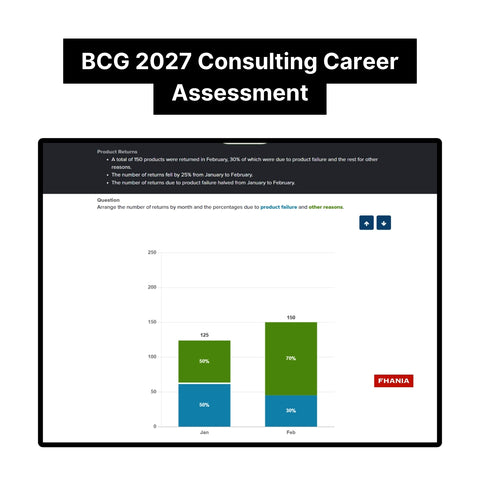
Drill daily in short sessions — 15 minutes beats a weekly marathon. Use this progression: first, pure arithmetic drills (percentages, multiplications, divisions) until they're automatic; second, word-problem drills where you set up the equation from a business sentence; third, exhibit drills where you pull numbers from a chart and compute insights against a timer.
Build the drills into real case practice. Our BCG prep tutorial includes the Quantitative Reasoning Test with real questions and answers plus nine real BCG offline interview cases with full answers — both are ideal for timed quant drilling on actual BCG-style numbers. Run each case's math sections separately against the clock, log your error patterns (most candidates have one recurring mistake — decimal slips, percentage-point confusion), and eliminate them one by one.
Half a second of hesitation on every calculation compounds across a 40-minute case into a candidate who looks quantitatively weak. BCG doesn't expect a human calculator — it expects fluency. The 2027 intake candidates who pass treat mental math like a muscle: drilled daily until it's boring, so that in the interview the numbers just flow and all their energy goes into the thinking.
FAQ
Can I use a calculator in BCG case interviews? No. All math is mental, sometimes with rough paper for exhibit work. Train accordingly.
What math topics should I prioritize? Percentages, growth rates, weighted averages, break-even, and unit economics. These cover 90% of BCG case math.
How do I stop making arithmetic errors under pressure? Simplify aggressively (round numbers), verbalize each step, and always sanity-check the result before moving on.
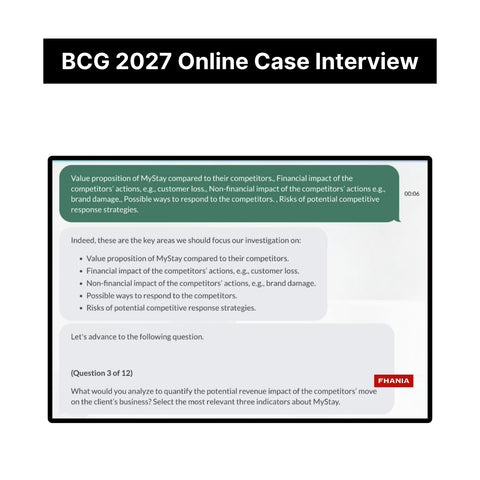
Does the online case test mental math too? Yes — the Casey chatbot and Quantitative Reasoning Test both include timed quantitative sections where fast, accurate math is essential.
Preparing for BCG's Quantitative Assessments? Our 2027 BCG Consulting Career Assessment, Online Case and Quantitative Reasoning Test Tutorials has the exact questions and answers — $79 one-time, instant download.