BCG Candidate-Led Case Interview: How to Drive the Case Yourself
A BCG candidate-led case interview puts you in the driver's seat: you — not the interviewer — decide which questions to ask, which analyses to run, and where the case goes next. Passivity is fatal. Candidates who wait for the interviewer to lead get marked passive and cut, no matter how smart their answers are.
What a BCG Candidate-Led Case Interview Is
Unlike interviewer-led cases (McKinsey's style), a BCG candidate-led case interview hands you an open-ended business problem and expects you to structure it yourself. You lay out your framework, state your hypothesis, and then proactively ask for the data you need: "I'd like to look at the revenue breakdown by segment," not "What should I look at next?"
What the BCG Candidate-Led Case Interview Assesses
The BCG candidate-led case interview assesses ownership of the problem. BCG's logic is simple: real consultants drive workstreams, so the case tests whether you naturally do that. Interviewers score structure (is your framework MECE and relevant?), hypothesis-driven thinking (are you testing ideas or just exploring?), quantitative fluency (fast, accurate math), and synthesis (do you land a crisp recommendation?).
The silent killer is passivity. Candidates who ask "what data is available?" instead of requesting specific analyses, or who wait for the interviewer to suggest next steps, fail the drive test. You can have the right framework and still be rejected if you never take control of the conversation.
How to Prepare for the BCG Candidate-Led Case Interview
The only way to build case-driving muscle is repetition with real BCG-style cases. Generic frameworks from a book will not make you proactive — practicing against actual BCG prompts will.
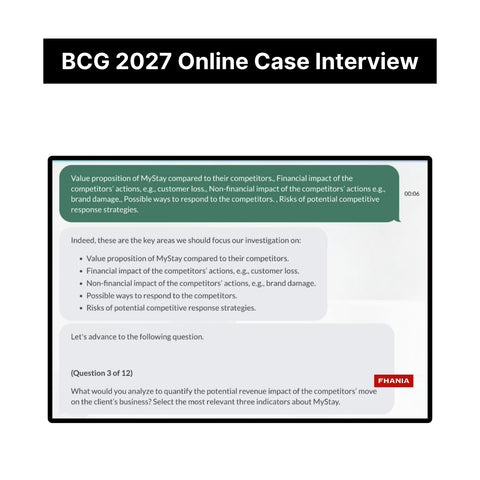
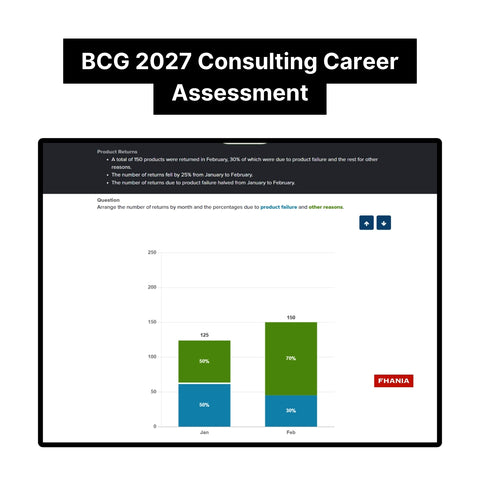
Our BCG prep tutorial includes nine real BCG offline interview cases with full answers, plus the HireQuo Online Case and Consulting Career Assessment materials — all with the exact questions BCG asks. Use the nine cases to drill the candidate-led skill specifically: for each case, write your structure first, generate your own data requests before reading the answer, and practice stating your hypothesis out loud before each analysis. Record yourself if you can — most candidates discover they sound far more passive than they feel.
If you wait for the interviewer to lead, BCG will hand your offer to someone who didn't. Candidate-led means candidate-led: every practice session where you let a partner feed you the next step is training yourself to fail. The 2027 intake candidates who convert are the ones who walked in already comfortable driving the entire case alone.
FAQ
How is a candidate-led case different from an interviewer-led case? In a candidate-led case, you decide the structure, questions, and analyses. In an interviewer-led case, the interviewer guides you through pre-set questions. BCG is firmly candidate-led.
How many cases are in a BCG first round? Typically two candidate-led cases plus a fit interview.
Should I still use frameworks in a candidate-led case? Yes, but custom-built for the case — never a memorized template recited on autopilot. BCG interviewers penalize rigid framework recitation.
Can the drive skill be learned quickly? It improves fast with deliberate practice against real cases — typically 2-3 weeks of daily timed practice makes a visible difference.
Preparing for BCG's Candidate-Led Case Interview? Our 2027 BCG Consulting Career Assessment, Online Case and Quantitative Reasoning Test Tutorials has the exact questions and answers — $79 one-time, instant download.