Bank of England SJT: Time Management & Prioritisation Questions
Time management and prioritisation questions in the Bank of England SJT test whether you can rank competing demands like a central banker: impact first, deadlines second, personal preference never. The winning instinct is simple — protect the Bank's priorities and communicate early when something has to give.
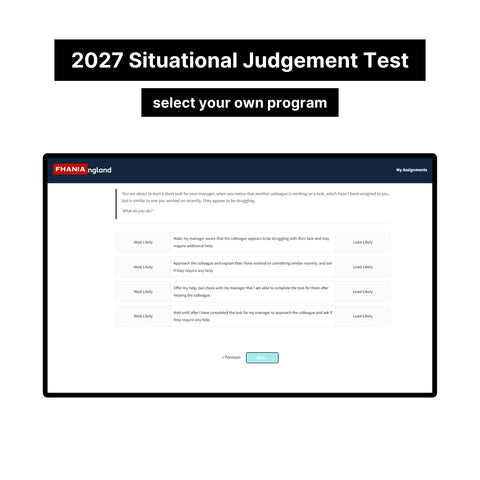
What Bank of England SJT Prioritisation Questions Look Like
You are given a morning full of collisions: an urgent request from a senior stakeholder, your own analysis due by end of day, a colleague who needs help, and a meeting you could arguably skip. You rank the actions. The traps are designed to catch two instincts: the people-pleaser who helps everyone and finishes nothing, and the lone wolf who hits their own deadline while a critical stakeholder waits. The Bank's preferred answers balance delivery with communication — you reprioritise, you inform affected parties early, and you do not silently drop commitments.
The Framework for SJT Prioritisation at the Bank of England
Use this hierarchy on every time management scenario:
- Impact on the Bank's objectives — regulatory deadlines and stakeholder-critical work come first.
- Urgency vs. importance — a genuinely urgent stakeholder request outranks routine work, but manufactured urgency does not.
- Communicate trade-offs — if something must slip, tell the affected person early and propose an alternative. Silence is penalised.
- Do not sacrifice quality for speed — rushing out flawed analysis to hit a deadline is scored badly at a central bank.
- Delegate or escalate properly — asking for help through the right channel beats heroic overwork that fails.
The consistent signal: a good Bank employee manages expectations as actively as they manage their calendar. The candidates who fail these questions are the ones who pick "work late and do everything" — the Bank reads that as poor judgement, not dedication.
How to Master Prioritisation Questions
Drill multi-demand scenarios with explained answers until the impact-first ranking feels automatic. Our 2027 Bank of England Situational Judgement Test and Video Interview and Answers includes real-style prioritisation questions with full breakdowns of why each ranking is right or wrong — the fastest way to build the instinct.
Frequently Asked Questions
How many prioritisation questions are in the Bank of England SJT? Prioritisation and time management scenarios are among the most frequent question types across the 45-question test.
Should I ever choose "work longer hours" in a prioritisation question? Rarely as a top answer. The Bank rewards smart reprioritisation and communication over brute-force overwork.
What is the biggest mistake in Bank of England SJT prioritisation questions? Trying to do everything and communicating nothing. Dropping a commitment without telling anyone is scored worse than renegotiating a deadline.
Do prioritisation questions have objectively right answers? They are scored against the Bank's values framework. Practising with explained, Bank-specific answers teaches you that framework.
Preparing for Bank of England's SJT - prioritisation? Our 2027 Bank of England Situational Judgement Test and Video Interview and Answers(https://offertutoring.com/products/bank-of-england-prep-tutorials) has the exact questions and answers — $79 one-time, instant download.