

Bank of England SJT: How to Answer Ethical Dilemma Questions
Ethical dilemma questions in the Bank of England SJT test whether you do the right thing when it costs you. Pick the answer that protects integrity and the public interest — even over team loyalty or convenience — and you will score well. The Bank is a regulator; its SJT ethical questions treat integrity as non-negotiable.
What Bank of England SJT Ethical Dilemma Questions Look Like
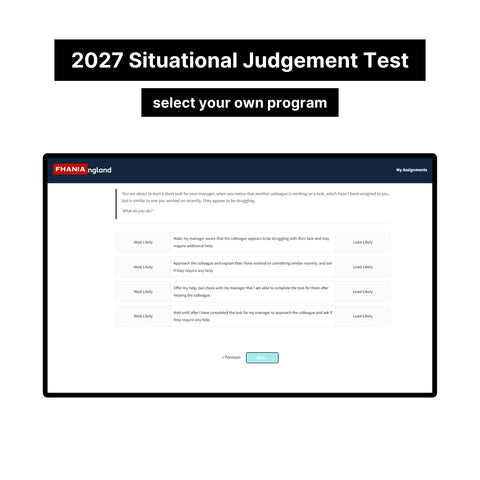
A typical scenario: you notice a colleague has submitted analysis with an error that flatters their results, and flagging it will delay the team's deliverable. Or you are asked to share confidential information with someone who does not strictly need it. You must rank or select responses. The trap options usually sound reasonable — "talk to them privately later," "it is not your responsibility," "the deadline matters most" — but the Bank's marking rewards the response that surfaces the issue through the proper channel, promptly and honestly.
The Framework for Bank of England SJT Ethical Dilemmas
Apply this logic to every ethical scenario:
- Integrity over loyalty. Protecting a colleague's reputation never outranks doing the right thing. Covering up is always scored badly.
- Use proper channels. Raise concerns with your manager or through formal reporting routes — not gossip, not silence, not vigilante justice.
- Act promptly. Delaying or hoping the problem resolves itself is scored as avoidance.
- Take ownership. "Not my job" is one of the worst answers in the Bank's framework. If you saw it, it is your responsibility to act.
- Protect confidentiality. Never share sensitive information to be helpful, even with good intentions.
Notice the pattern: the Bank wants people who escalate correctly, act quickly, and never trade integrity for convenience. Once you internalise that hierarchy, ethical dilemma questions become the easiest section of the test.
How to Drill Ethical Dilemma Questions
Read each scenario, commit to your ranking, then compare against explained model answers to calibrate your instincts. Our 2027 Bank of England Situational Judgement Test and Video Interview and Answers includes real-style ethical dilemma questions with full explanations of why the Bank ranks each response the way it does — drill them until the integrity-first instinct is automatic.
Frequently Asked Questions
Are ethical dilemma questions the most important part of the Bank of England SJT? They carry heavy weight because integrity is the Bank's foundational value. Getting them wrong signals a values mismatch, which is hard to recover from.
Should I always choose the most honest answer in Bank of England SJT ethical questions? Usually yes — but honesty must be paired with proper process. Blunt confrontation is rarely the top answer; honest, professional escalation is.
What is the worst answer in an ethical dilemma scenario? Ignoring the issue or covering it up. Both signal that you cannot be trusted with the Bank's responsibilities.
How do I prepare for Bank of England SJT ethical dilemmas? Practise with Bank-specific questions and study the explanations. Generic ethics advice will not teach you the Bank's exact ranking logic.
Preparing for Bank of England's SJT - ethical dilemmas? Our 2027 Bank of England Situational Judgement Test and Video Interview and Answers(https://offertutoring.com/products/bank-of-england-prep-tutorials) has the exact questions and answers — $79 one-time, instant download.