Bank of England SJT: Handling Conflict Questions
Handling conflict questions in the Bank of England SJT are the purest test of professional emotional intelligence in the whole assessment. The winning pattern is consistent: address conflict directly, listen first, focus on the work not the person, and escalate only after genuine attempts to resolve it. Avoidance and aggression both fail.
What Bank of England SJT Conflict Questions Look Like
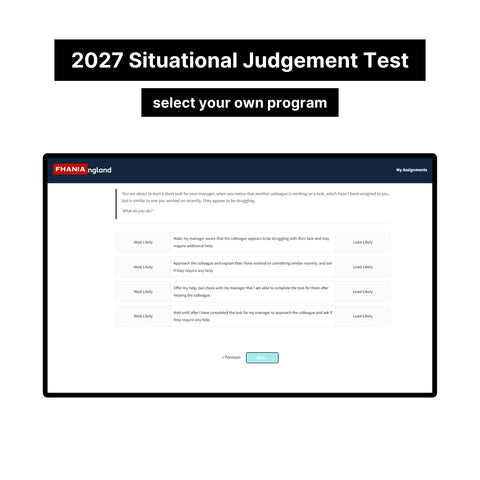
You disagree with a colleague's approach on a joint deliverable. A team member dismisses your contribution in a meeting. Two colleagues are in open conflict and it is affecting the work. You rank the responses. The answer set always includes tempting extremes — confront them bluntly, report them immediately, say nothing and work around them — alongside the measured middle ground the Bank actually wants. Spotting that the middle-ground professional response outranks both extremes is the core skill these questions test.
The Framework for Conflict Scenarios
- Address it directly and privately. A calm one-to-one conversation outranks public confrontation and silent resentment alike.
- Listen before you judge. Seek to understand the other person's perspective before defending yours — the Bank rewards this highly.
- Focus on the work. Frame disagreements around outcomes and evidence, never personalities.
- Find common ground. Propose solutions that serve the shared objective rather than winning the argument.
- Escalate as a last resort. After genuine direct attempts fail, involving a manager is reasonable. Skipping straight to escalation is not.
- Never retaliate or gossip. Undermining a colleague, even subtly, is scored as a serious values failure.
The Bank is a consensus-driven institution where policy is made through rigorous debate. Its conflict questions select for people who can disagree productively — firm on substance, respectful in manner.
How to Prepare for Conflict Questions
Conflict scenarios trigger gut reactions, so train yours. Work through real-style conflict questions, commit to your rankings, then study the explanations to see where your instincts diverge from the Bank's. Our 2027 Bank of England Situational Judgement Test and Video Interview and Answers includes conflict scenarios with full answer breakdowns — drill them until the professional, direct, empathetic response is automatic.
Frequently Asked Questions
Should I confront a colleague directly in Bank of England SJT conflict scenarios? Yes — calm, private, direct conversation is usually the top-ranked response. Avoidance and public confrontation both score badly.
When should I escalate a conflict to a manager? After you have genuinely tried to resolve it directly. Immediate escalation reads as avoiding difficult conversations.
Is compromising always the best answer? Not always — the Bank values principled positions backed by evidence. Compromise for the sake of peace can score worse than a well-argued professional disagreement.
How many conflict questions are in the Bank of England SJT? Conflict and difficult-relationship scenarios appear regularly across the 45 questions.
Preparing for Bank of England's SJT - conflict? Our 2027 Bank of England Situational Judgement Test and Video Interview and Answers(https://offertutoring.com/products/bank-of-england-prep-tutorials) has the exact questions and answers — $79 one-time, instant download.