Bank of England SJT: Coping with Stress & Uncertainty Questions
Coping with stress and uncertainty questions in the Bank of England SJT reveal how you behave when plans collapse. The Bank rewards composure, adaptability, and asking for help through proper channels. Panic, denial, and silent struggling are all scored badly — central bankers are expected to stay steady when markets do not.
What Bank of England SJT Stress Questions Look Like
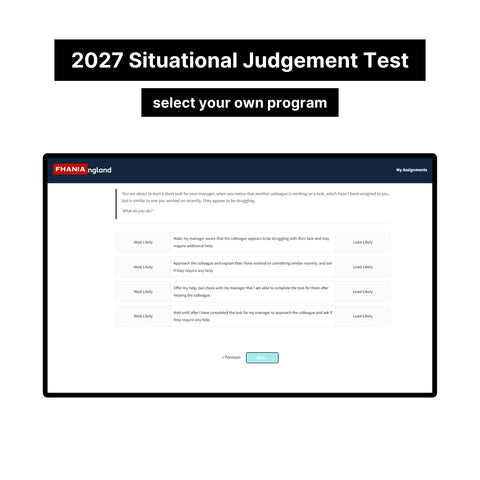
Scenarios throw you into disruption: a key system fails before a deadline, priorities change overnight, your workload doubles when a colleague goes on leave, or you are given an ambiguous task with no clear owner. You rank responses. The traps prey on common instincts — powering through alone until you burn out, complaining to colleagues, freezing while you wait for clarity, or cutting corners to hit the deadline. The Bank's preferred answers stay calm, clarify what is needed, reprioritise openly, and seek support early.
The Framework for Stress and Uncertainty Scenarios
- Stay composed and act. Acknowledge the pressure, then focus on what you can control. Emotional reactions score badly.
- Seek clarity fast. When things are ambiguous, asking the right questions early beats guessing or stalling.
- Reprioritise openly. Tell stakeholders what changes and what the new plan is — do not silently let things slip.
- Ask for help properly. Requesting support through your manager or team is a strength, not a weakness, in the Bank's framework.
- Protect quality. Stress never justifies sloppy work at a central bank — accuracy under pressure is the whole point.
- Learn afterwards. Reflecting on what could be improved shows the resilience mindset the Bank wants.
Notice what the Bank is really selecting for: people who function reliably in a crisis. Monetary and financial stability work does not pause for anyone's bad week.
How to Prepare for Stress Questions
These scenarios feel personal, which makes them easy to answer emotionally rather than strategically. Drill them with explained model answers until the calm, structured response is your default. Our 2027 Bank of England Situational Judgement Test and Video Interview and Answers includes stress and uncertainty scenarios with full breakdowns — practise until composure is a habit, not a hope.
Frequently Asked Questions
Are stress questions common in the Bank of England SJT? Yes — coping with pressure and ambiguity is a core competency, so expect several such scenarios among the 45 questions.
Should I admit to feeling stressed in my answers? Acknowledging pressure is fine; being controlled by it is not. The best answers show you managing stress, not denying it.
Is asking for help a weak answer in stress scenarios? No — in the Bank's framework, seeking support through proper channels is scored positively. Silent struggling is the weak answer.
What is the worst response to an uncertainty scenario? Freezing, guessing blindly, or waiting for someone else to decide. The Bank wants people who seek clarity and act.
Preparing for Bank of England's SJT - stress? Our 2027 Bank of England Situational Judgement Test and Video Interview and Answers(https://offertutoring.com/products/bank-of-england-prep-tutorials) has the exact questions and answers — $79 one-time, instant download.