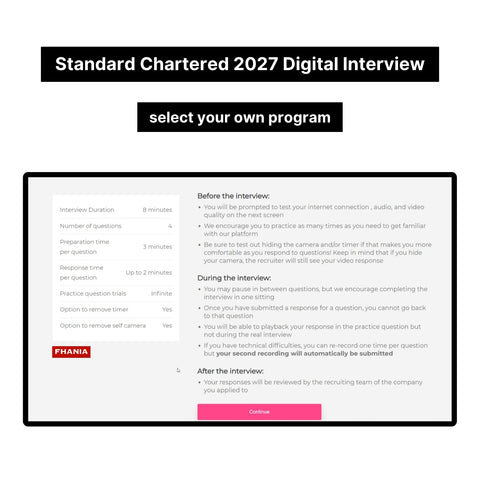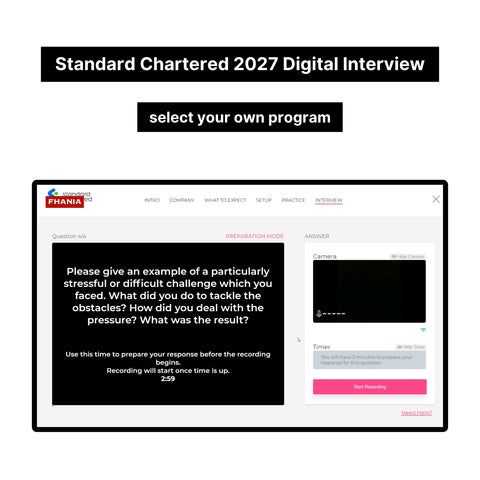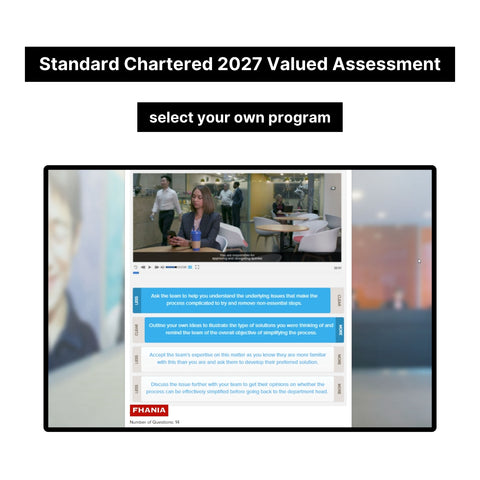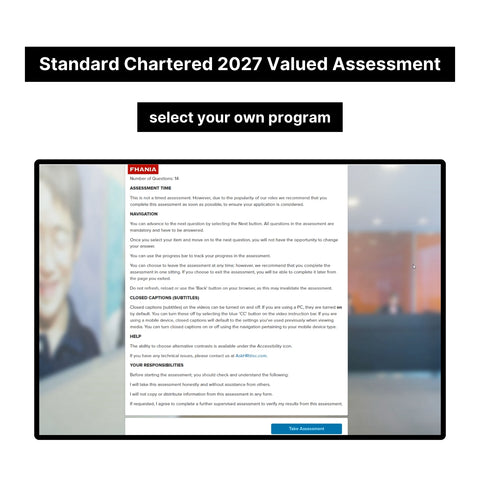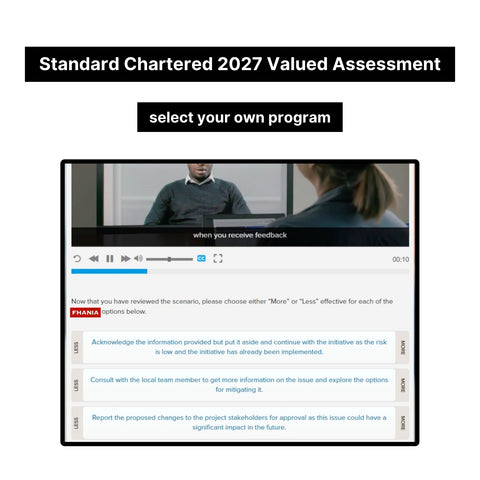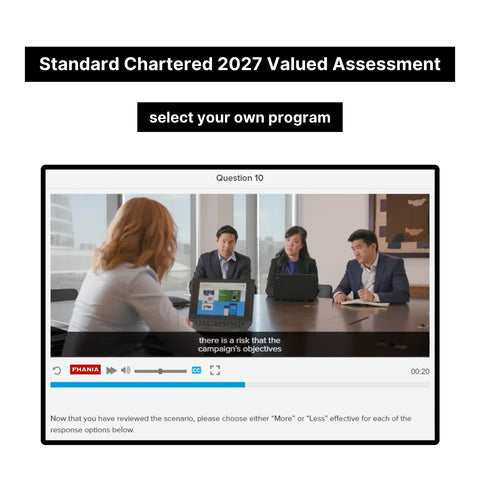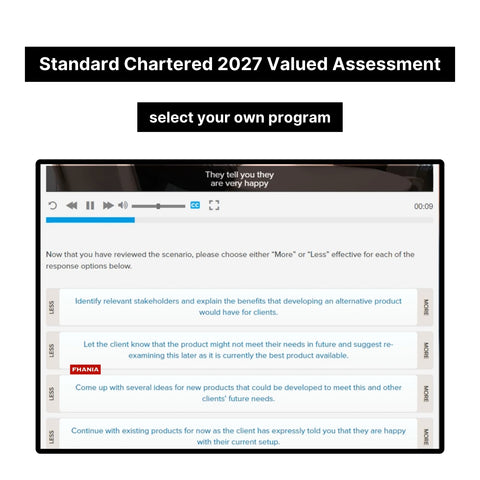


Standard Chartered Valued Behaviours Scenarios: Best and Worst Choices
If you are facing Standard Chartered valued behaviours scenarios, the useful question is not "how hard is it" but "what exactly is it testing". This guide focuses on the scenarios inside the Standard Chartered valued behaviours assessment: what interviewers and assessors are listening for, how to structure your approach, and where prepared candidates separate themselves from the rest.
What Standard Chartered valued behaviours scenarios Really Assess
Assessors use the scenarios inside the Standard Chartered valued behaviours assessment to answer three questions about you: can you think in a structured way, can you support a claim with evidence, and do you understand what the role at Standard Chartered actually involves. Candidates who prepare for those three questions, rather than for rumoured question lists, consistently look stronger.
- Answer the question that was asked, not the one you prepared for.
- Keep examples recent and relevant; one strong story beats three weak ones.
- Reflect at the end: what you learned is often the point of the Standard Chartered question.
How to Answer Standard Chartered valued behaviours scenarios Step by Step
A reliable sequence: research the format from official sources, practise the component skills in isolation, then rehearse complete runs while recording yourself or timing each section. Keep a short error log for Standard Chartered valued behaviours scenarios — the same two or three weaknesses usually explain most lost marks, and they are fixable within days once named.
Common Mistakes
- Hiding inside the team: "we" everywhere, your own role nowhere.
- Letting one hard item at Standard Chartered poison the sections that follow it.
- Answering a different, easier question than the one on the screen.
How to Practise This Week
Practise like it counts: same timing, same tools, same posture as the real thing. Alternate hard and easy material so confidence survives a difficult section, and finish every session by re-attempting your worst item. Small, honest repetitions are what turn Standard Chartered valued behaviours scenarios from a threat into a routine.
Frequently Asked Questions
What do candidates most often get wrong with Standard Chartered valued behaviours scenarios?
The recurring mistakes with Standard Chartered valued behaviours scenarios are rushing the first questions, answering the question they wished for instead of the one asked, and never reviewing practice attempts. With Standard Chartered valued behaviours scenarios, a calm first minute and a checked answer are worth more than raw speed.
Where can I check the current format of Standard Chartered valued behaviours scenarios?
Formats for Standard Chartered valued behaviours scenarios change between cycles and regions. Details may vary by role and region, so check the firm's official careers page for the current process. Anything in this guide describes what candidates commonly report, so use it to prepare, and use official sources to confirm.
What is the best way to prepare for Standard Chartered valued behaviours scenarios?
Start with the scenarios inside the Standard Chartered valued behaviours assessment: understand what it is testing, then practise the exact task types under time pressure. Short, regular sessions with honest review beat one long cram, because the skill being measured is judgement under mild pressure, not memorisation.
Preparing for Standard Chartered's interview? Our 2027 Standard Chartered Pymetrics Online Assessment & Video Interview Tutorials has practice questions and answers — $79 one-time, instant download.