

Lloyds Bank Situational Judgement Questions: Choosing Like a Colleague
For Lloyds Bank situational judgement questions, technique beats talent. This breakdown of situational judgement questions on workplace scenarios in Lloyds Bank selection covers the recurring question types, a worked approach for each, and how to divide your time so that accuracy survives pressure. Practise the methods here in the real format and the test becomes a familiar routine rather than an ambush.
What Lloyds Bank situational judgement questions Actually Contains
Think of situational judgement questions on workplace scenarios in Lloyds Bank selection as a small repertoire rather than a syllabus. A handful of item shapes recur in different clothing — a new chart, a new story, the same underlying comparison or change. Learn the repertoire and novelty stops being threatening: you are recognising, not inventing.
- Percentage points versus percentages: the distinction that quietly decides marks.
- Approximation items: round early, track the direction of the error, move on.
- True-false-cannot-say items inside situational judgement questions on workplace scenarios in Lloyds Bank selection: the passage is the only evidence allowed.
A Worked Approach to Lloyds Bank situational judgement questions
Give every item the same opening ritual: underline the actual question, list the given quantities, then choose the method. Rituals sound dull; under pressure they are what stands between you and a blank minute. In situational judgement questions on workplace scenarios in Lloyds Bank selection, the candidates who look calm are usually just the ones whose first ten seconds are always the same.
Managing the Clock
Speed in situational judgement questions on workplace scenarios in Lloyds Bank selection is mostly subtraction: fewer re-reads, fewer method changes mid-item, fewer decorative calculations. Practise removing steps, not adding effort. A clean, short solution path beats a brilliant long one whenever the clock is part of the test — and in Lloyds Bank situational judgement questions, the clock is always part of the test.
How to Practise This Week
Separate learning days from testing days. On learning days, go slowly through situational judgement questions on workplace scenarios in Lloyds Bank selection and interrogate every method until it makes sense. On testing days, sit full timed runs and touch nothing until the review. Mixing the two modes produces candidates who are knowledgeable and slow, or fast and fragile — the modes exist to prevent exactly that.
Frequently Asked Questions
Where can I check the current format of Lloyds Bank situational judgement questions?
Use this guide to prepare for Lloyds Bank situational judgement questions and the firm itself for confirmation. Details may vary by role and region, so check the firm's official careers page for the current process.
What is the best way to prepare for Lloyds Bank situational judgement questions?
Work backwards from situational judgement questions on workplace scenarios in Lloyds Bank selection. List the skills it rewards, practise each one separately, then combine them in timed runs. Review every mistake for its cause — misreading, rushing or a genuine knowledge gap — because each cause has a different fix.
How difficult is Lloyds Bank situational judgement questions in practice?
The honest answer is that Lloyds Bank situational judgement questions feels harder than it is. The content is usually within reach of a prepared candidate; the pressure comes from the clock and from meeting the format for the first time. Familiarity is the biggest lever you control.
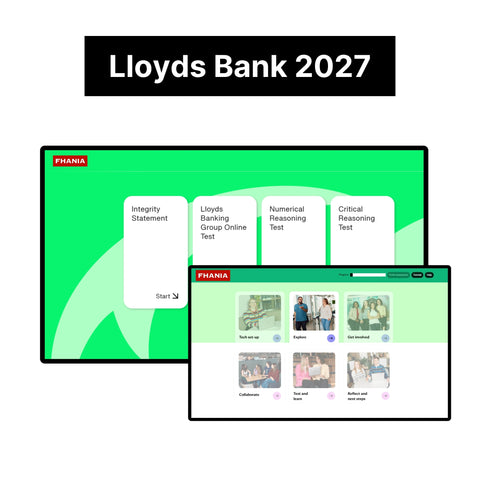
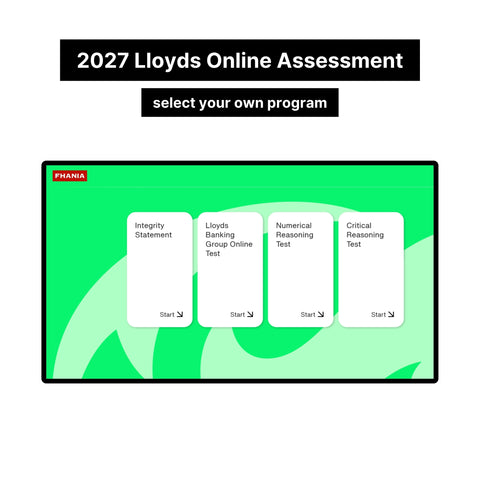
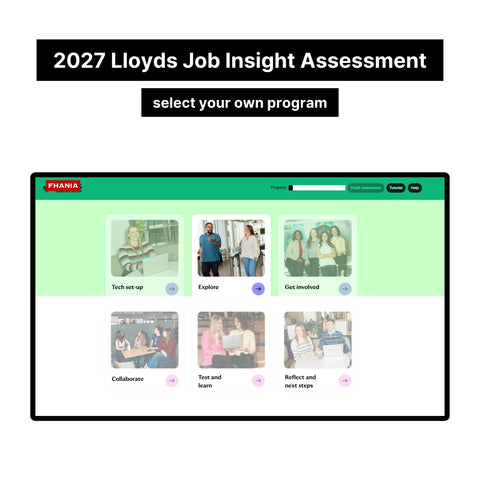
Preparing for Lloyds Bank's interview? Our 2027 Lloyds Bank Online Assessment & Job Insight Assessment Tutorials has practice questions and answers — $79 one-time, instant download.