Akuna Capital Spread Trading 2027: Finding Arbitrage
For the Akuna Capital spread arbitrage question, the approach is: establish fair value for each stock and the spread, trade against mispriced quotes to discover the true relationship, and use the six trades as information-gathering experiments. Commonly reported by candidates, this is a live trading game — process beats any single 'right' answer.
What This Question Assesses
This tests trading instincts in real time: price discovery, spread logic, and information management. The interviewer plays the market against you — the six-trade limit forces you to make each trade count as both a position and an experiment. Candidates who trade randomly fail; those who probe, update, and exploit fail less.
How to Answer: Akuna Capital Spread Arbitrage
- Step 1 — Form priors: start with your best estimate of each stock's value and the fair spread between them — state them aloud.
- Step 2 — Probe with small trades: use early trades to discover the interviewer's pricing — buy where they are cheap, sell where they are rich, and watch how they respond.
- Step 3 — Trade the relationship: once you sense the true spread, trade the mispriced leg — long the cheap one, short the rich one — keeping the spread neutral.
- Step 4 — Update and exploit: adjust your fair values with every fill; use remaining trades on the clearest edge, and explain your reasoning throughout.
Example: "I would start by stating my fair values for both stocks and the spread, then use my first trades to probe the market's pricing — buying where quotes look cheap relative to my fair value. As fills reveal the true relationship, I would concentrate remaining trades on the clearest mispricing, trading the spread to stay neutral."
Common Mistakes on Akuna Capital Spread Arbitrage
- Trading without stating fair values — the interviewer cannot score reasoning they cannot hear.
- Using all six trades immediately on the first quote — probe first, exploit after; information has value.
- Directional betting instead of spread trading — the question offers the spread for a reason: trade the relationship, not the outright.
Trading games are won on process, not prediction. Practice narrating fair value, probing, and updating — that loop is the whole game.
Keep Reading
- citi why this department answer
- How to Solve Akuna Capital's Trailing-Zeros Question
- Akuna Capital C++ Interview: Memory Management & Debugging Questions
FAQ
What is spread trading?
Trading the price relationship between two instruments — long one, short the other — profiting from convergence or divergence.
What counts as arbitrage here?
A genuine risk-free mispricing is rare; the game really tests finding and trading relative-value edges under constraints.
How should I use the 6-trade limit?
As a budget: early trades buy information, later trades exploit it. Say this explicitly.
What if I lose on the game?
Losing with sound process still passes — the interviewer scores reasoning, updating, and risk discipline, not P&L.
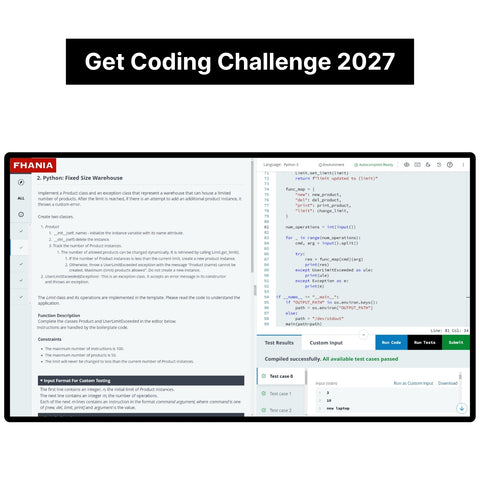
Preparing for Akuna Capital's interview? Our 2027 Akuna Capital Coding Challenge Math Test Probability Test On-demand Interview Exact Questions and Answers has practice questions and answers — $79 one-time, instant download.